
Estimated reading time: 7 minutes
Key Takeaways
- AI search engines evaluate credibility through trust signals rather than just keywords and backlinks.
- Named authorship with credentials significantly outperforms anonymous content in AI-generated answers.
- Entity verification and brand consistency across platforms are critical for AI citation.
- Structured data and schema markup help AI systems understand and verify your expertise.
- Third-party validation from authoritative sources compounds your agency’s credibility.
Table of contents
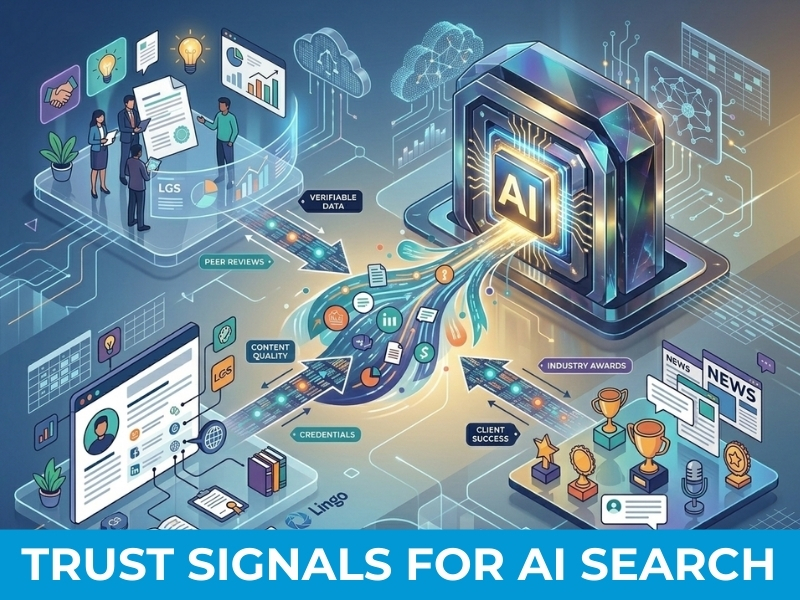
AI search engines don’t just crawl content, they evaluate it. When tools like ChatGPT or Google’s AI Overviews generate answers, they prioritize sources with verifiable credibility markers: named experts, consistent organizational identities, and third-party endorsements.
For agencies, this shifts the focus from traditional SEO metrics to trust signals, the digital proof points that convince AI systems your content is authoritative enough to cite.
What Trust Signals Mean in AI Search
The Currency of Credibility
Trust signals in AI search are measurable indicators that your agency is a reliable source. They include:
- Named authorship with verifiable credentials
- Structured metadata (e.g., schema markup)
- Cross-platform brand consistency
- Backlinks from authoritative domains
Unlike traditional SEO, where rankings rely heavily on keywords and backlink volume, AI systems prioritize provenance. They ask: “Is this source traceable to a real organization or expert? Do independent parties validate its expertise?”
For example, an anonymous “7 SEO Tips” post might rank well organically but rarely appears in AI answers. The same content published under a bylined author with industry credentials gains significantly more visibility, even with identical keywords.
How AI Search Differs From Traditional SEO
Agencies often discover their top-ranking content gets ignored by AI tools because:
- Authorship is unclear
- Brand identity isn’t consistently represented online
- Content lacks structured data or third-party citations
As explained in this comprehensive guide to SEO in ChatGPT responses, the ranking factors that matter to AI are fundamentally different from traditional search engines.
How AI Evaluates Expertise
The Three-Part Framework
AI systems assess sources through:
1. Entity Verification
Is your agency’s name, location, and executive team consistent across your website, directories, and platforms like LinkedIn? Do you have Organization schema markup with sameAs links connecting to verified profiles?
Understanding entity-based SEO principles becomes crucial for agencies looking to establish this foundational credibility.
2. Evidence of Authority
- Published research or methodologies cited by third parties
- Guest contributions on reputable industry sites
- Awards, media coverage, or speaking engagements
3. Technical Rigor
- Fast, secure, accessible websites
- Content updated within the last 12 months
- Clear content hierarchies (e.g., breadcrumb markup)
Case in point: OpenAI’s web crawler documentation explicitly states it weights sources with “verifiable expertise” more heavily than anonymous content.
Building Author Credibility
Why Bylines Matter
Anonymous content forces AI systems to evaluate your agency as a single entity, a high bar for newer or smaller firms. Named authors allow credibility to accumulate at the individual level.
The latest E-E-A-T guidelines for 2025 emphasize that demonstrable expertise at the author level significantly impacts content credibility in AI systems.
Key elements for author profiles:
- Full name and title (e.g., “Jamie Rivera, Head of SEO”)
- Credentials (e.g., “Certified Google Analytics Professional”)
- Years of experience in the field
- Links to published work (articles, speaking engagements)
- ORCID or LinkedIn profile
Example of an AI-optimized author schema:
“The best way to signal expertise to AI systems is through consistent, verifiable author information that can be cross-referenced across multiple platforms.”
Strengthening Brand Authority
Signals AI Looks For
1. Knowledge Panel Readiness
- Ensure your Google Business Profile is verified and matches your website’s NAP (Name, Address, Phone)
- Use consistent branding across Crunchbase, LinkedIn, and industry directories
2. Third-Party Validation
- Earn mentions in niche publications (e.g., “Top 10 B2B Marketing Agencies”)
- Partner with established platforms (e.g., co-hosted webinars with HubSpot)
3. Transparent Processes
- Publish methodologies with reproducible steps
- Share anonymized datasets or templates
Actionable Roadmap
Phase 1: Quick Wins (0–30 Days)
- Audit top content for missing bylines
- Create author profile pages with schema markup
- Implement Organization schema on your homepage
Phase 2: Authority Expansion (30–90 Days)
- Publish 2–3 in-depth case studies with metrics
- Secure guest posts on industry blogs
- Apply for relevant awards or certifications
Phase 3: Long-Term Growth (90+ Days)
- Release original annual research
- Build topical clusters around niche expertise
- Monitor AI citations via manual searches
For agencies, the shift to AI search isn’t about reinventing content, it’s about making existing expertise legible to machines. Start with authorship and entity consistency, then layer on validation through partnerships and measurable results.
Frequently Asked Questions
What are the most important trust signals for AI search?
The most critical trust signals include named authorship with verifiable credentials, consistent entity information across platforms, structured schema markup, and third-party validation through backlinks from authoritative domains. AI systems prioritize sources they can verify and trace back to real experts or organizations.
How does AI evaluate author credibility differently than traditional search engines?
AI systems focus on provenance and verifiable expertise rather than just keyword relevance. They look for consistent author information across platforms, professional credentials, years of experience, and evidence of real-world authority like published research or industry recognition. Anonymous content significantly underperforms in AI-generated answers.
Can small agencies compete with larger firms in AI search results?
Yes, smaller agencies can compete by focusing on named authorship and niche expertise. Since AI evaluates credibility at both the individual and organizational level, having experts with verifiable credentials can level the playing field. Consistent branding and third-party validation matter more than company size.
How long does it take to see results from trust signal optimization?
Quick wins like adding author bylines and schema markup can show results within 30 days. However, building substantial authority through third-party validation and consistent entity representation typically takes 90+ days. AI systems need time to crawl and verify the credibility signals across multiple sources.
What schema markup is most important for AI search?
Organization schema with sameAs links, Person schema for authors, and Article schema with clear authorship attribution are essential. These help AI systems verify your entity information and connect your content to credible sources. Breadcrumb markup also helps establish content hierarchy and context.